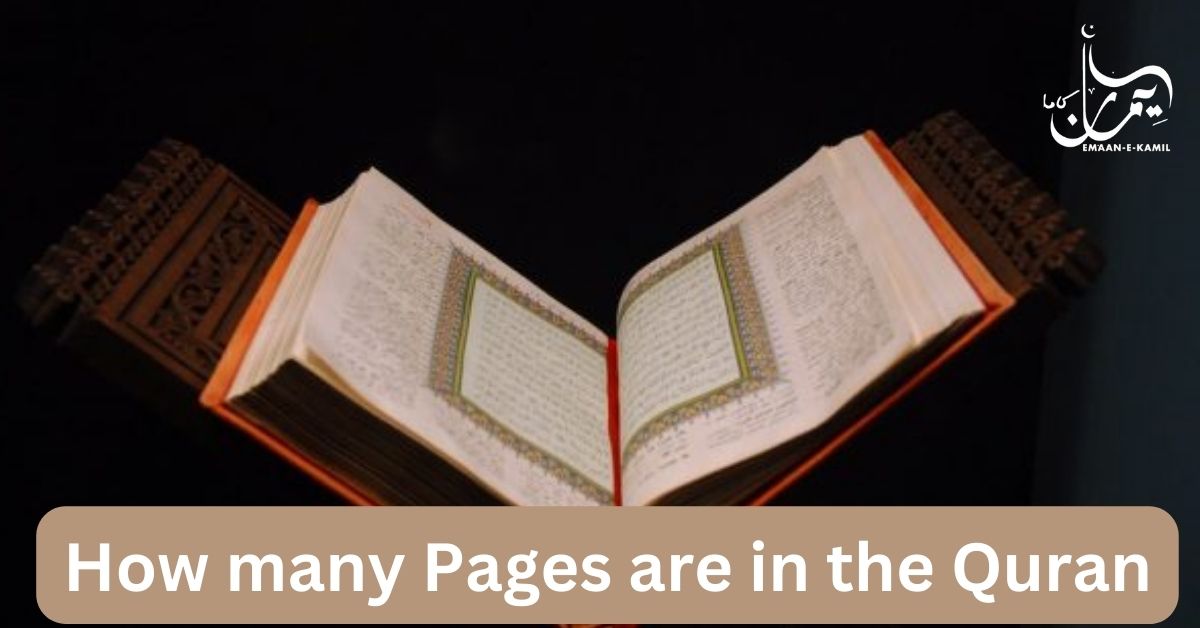
The most commonly cited facts about the Quran’s structure are:
- 604 pages
- 6,236 ayat (verses)
- 114 Surahs
- 30 Juz (Para)
So, how many pages are in the Quran, and why do the verse counts sometimes vary between sources? Different early scholars counted the verses differently: Ibn Abbas counted 6,616, Nafi counted 6,217, Shayba counted 6,214, and Egyptian scholars counted 6,226. The renowned Arabic scholar Zamakhshari counted 6,666 by a different method of segmentation.
The most widely accepted and commonly used count today is 6,236 verses. This number comes from including the Bismillah as part of Surah Al-Fatihah, while Surah At-Tawbah (chapter 9) is the only chapter that does not begin with the Bismillah at all.
How Many Pages Are There in Each Juz (Para) of the Quran?
Each Juz (Para) of the Quran typically spans 20 pages in a standard Arabic Mushaf. Since the Quran is divided into 30 equal Juz, this consistent 20-page structure makes it easier for readers to track their daily recitation, especially during Ramadan.
When Was the Holy Quran Revealed?
The Quran was revealed during the month of Ramadan, specifically on Laylat al-Qadr (the Night of Power). Ramadan, the ninth month of the Islamic calendar, is observed by Muslims worldwide through fasting, prayer, and reflection:
“The month of Ramadan is that in which was revealed the Quran, a guidance for the people and clear proofs of guidance and criterion.”
Can Children Learn the Quran Online?
Yes children can learn the Quran through online classes with qualified instructors, such as those offered by Noor Academy. Learning under experienced teachers helps beginners build both a strong foundation and a genuine love for the Quran from an early age.
Why Understanding How Many Pages Are in the Quran Matters
In a world full of distraction, conflict, and competing priorities, understanding the Quran’s structure its pages, Surahs, and Juz is often the first step toward consistent recitation and memorization. Knowing that the Quran spans 604 pages across 30 Juz helps readers set realistic daily or monthly recitation goals.
Why Was the Quran Revealed in Arabic?
The Quran was revealed in Arabic because of the language’s precision, depth, and richness of meaning. While Arabic speakers can access the Quran directly, most non-Arabic speakers rely on translations to understand its teachings though translation alone often cannot capture every nuance of the original text. Listening to Quran recitation with an English translation and audio can help bridge this gap for learners.




One Response